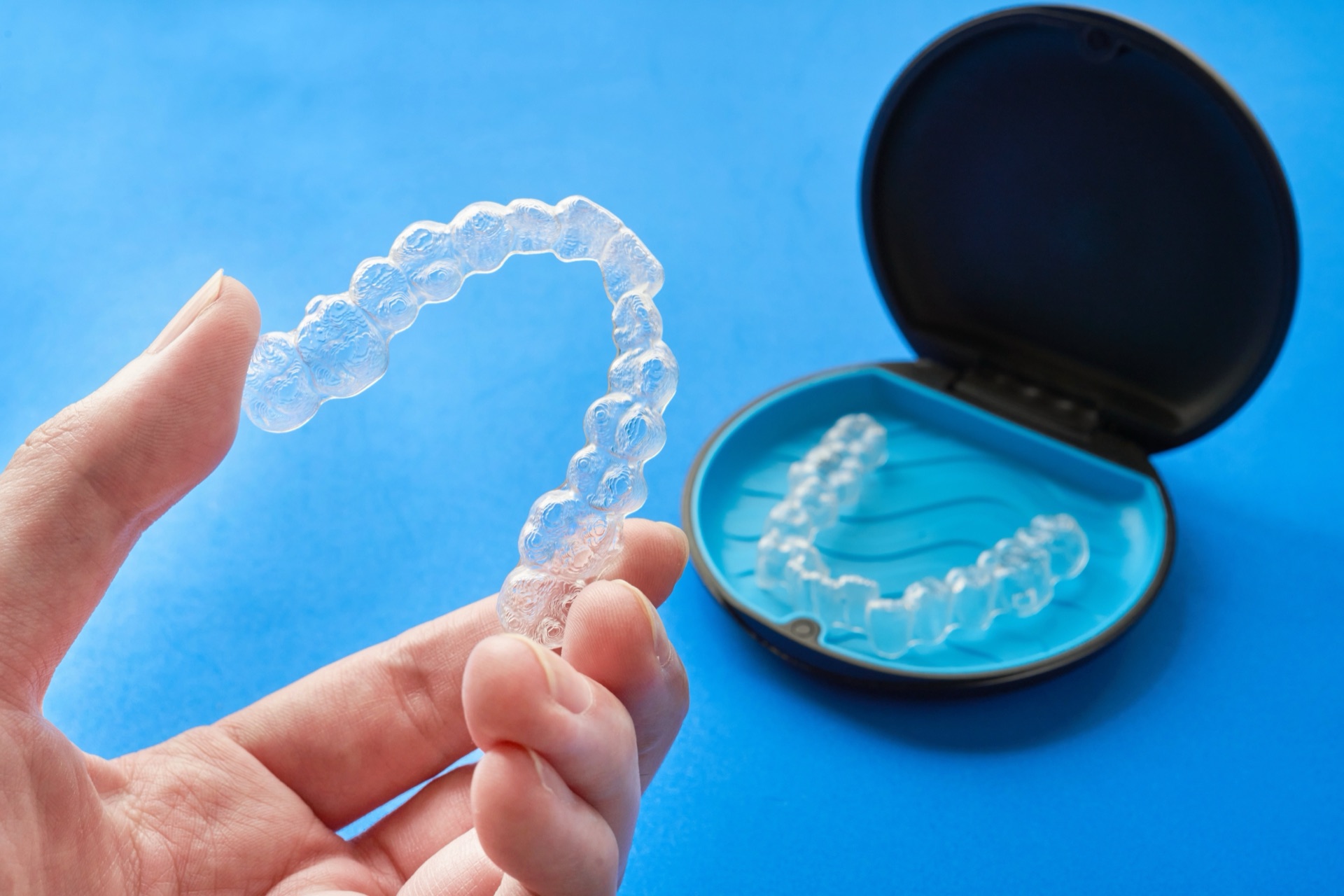
Closing gaps between teeth — with invisible aligners to a closed smile
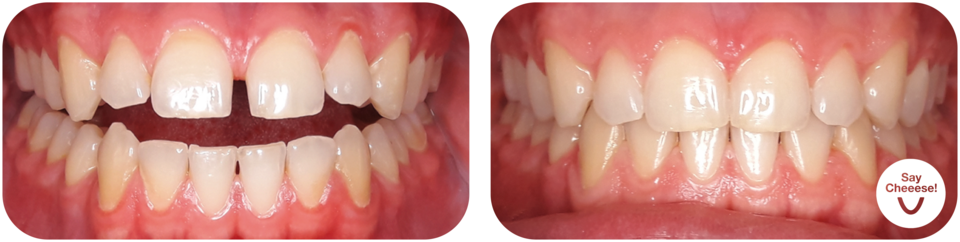
Why gaps form
A healthy bite ideally has no visible gaps between the front teeth. In reality many adults have them — for various reasons:
- Mid-line diastema: A congenital gap between the two upper central incisors, often influenced by a low-attached labial frenulum.
- Tooth–jaw size mismatch: The teeth are smaller than the available space in the jaw.
- Shifted teeth after tooth loss: When a back tooth was extracted without replacement, neighbouring teeth migrate into the empty space — and pull gaps open further forward.
- Bone loss through periodontitis: Teeth can detach from their position and drift apart.
Which cause applies we check at the consultation. The treatment depends on it.
What aligners can achieve
Aligners are excellent at moving teeth toward each other — i.e. closing gaps. Specifically:
- Mid-line diastema between upper incisors: usually closed in 3 to 5 months
- Several small gaps in the front and canine area: 4 to 8 months
- Gaps after tooth loss where neighbouring teeth need uprighting: usually possible, but takes longer
For many patients the correction in the smile-bow area (canine to canine) is the gold standard — and exactly where aligners are strongest.
What aligners cannot replace
Some situations require a combination:
- Very wide gaps (e.g. after losing a molar) often can't be fully closed — sometimes an implant or bridge is the better solution, and aligner therapy ensures the surrounding teeth stand straight again.
- Gaps from periodontitis: The inflammation must be treated first. Only then can an aligner plan start, otherwise pressure worsens the gum situation.
- Diastema with a pronounced frenulum: The frenulum sometimes needs correcting beforehand or the gap reopens after treatment.
How a typical gap correction runs
- Initial consultation with iTero scan: we see the gap size in 3D, measure the exact distance and verify tooth axes.
- Planning: the software shows how many tenths of a millimetre close per step and whether attachments are needed.
- Active wear: for small diastemata the easy package with 10 aligners often fits. For several gaps or larger distances the sensitive package with 20 aligners.
- Retention: gaps have a particularly stubborn memory. A bonded retainer wire behind the front teeth reliably keeps them from reopening.
Gap closed — what now?
When the main gap is gone we often check three finer points at the end:
- Tooth shape: sometimes the teeth next to a large gap taper slightly. A minimal composite addition on the edge gives them a more harmonious shape. Takes 15 minutes and stays stable for years.
- Tooth colour: when your smile moves into the foreground after correction, it's often the moment to consider a subtle bleaching. Completely optional — but the cherry on top for many.
- Gum line: for some small diastemata the gum peak between the teeth looks slightly elevated. In most cases it adjusts to the new tooth position within a few weeks.
What's not about aligners — but often asked
"Won't a gap close by itself if I wait?" — No. Gaps tend to grow larger over the years, especially when a size mismatch lies behind them.
"Can I just cover the gap with a crown?" — Theoretically yes, but for that healthy teeth must be ground down. That's an invasive step for a primarily aesthetic topic. An aligner correction is gentler and reversible-free — you keep all your tooth substance.
"What does it cost?" — The easy package starts at €1,580 per jaw (one-time) or from €44 per month in 36 interest-free instalments. Sensitive at €2,280 / €63. Which fits your case we clarify transparently at the consultation.
Want to see your gap in 3D?
Come to the free consultation. We scan your bite and show you directly how your smile can look after treatment. Honest, clear, no sales pressure.
Ready for your new smile?
Free consultation including iTero 3D scan and panoramic X-ray — Practice at Herrengasse 6–8, 1010 Vienna.
Book a free appointment