Aligners vs. traditional braces — which one fits you?
Two very different routes to straight teeth
When you decide as an adult to correct your teeth, you mainly face two options: traditional fixed braces with brackets and wires, or invisible aligners — so-called clear aligners. Both move teeth into the desired position. But they differ in almost everything in between: visibility, comfort, treatment duration, cleaning, cost — and what they can actually correct.
We'll go through each point. So that you know which option fits your everyday life by the end.
Visibility
Fixed braces sit directly on the teeth. Even though modern brackets can be made from tooth-coloured ceramic or transparent materials — they don't become entirely invisible. Wires catch the light, brackets stand out. In daily life you see them.
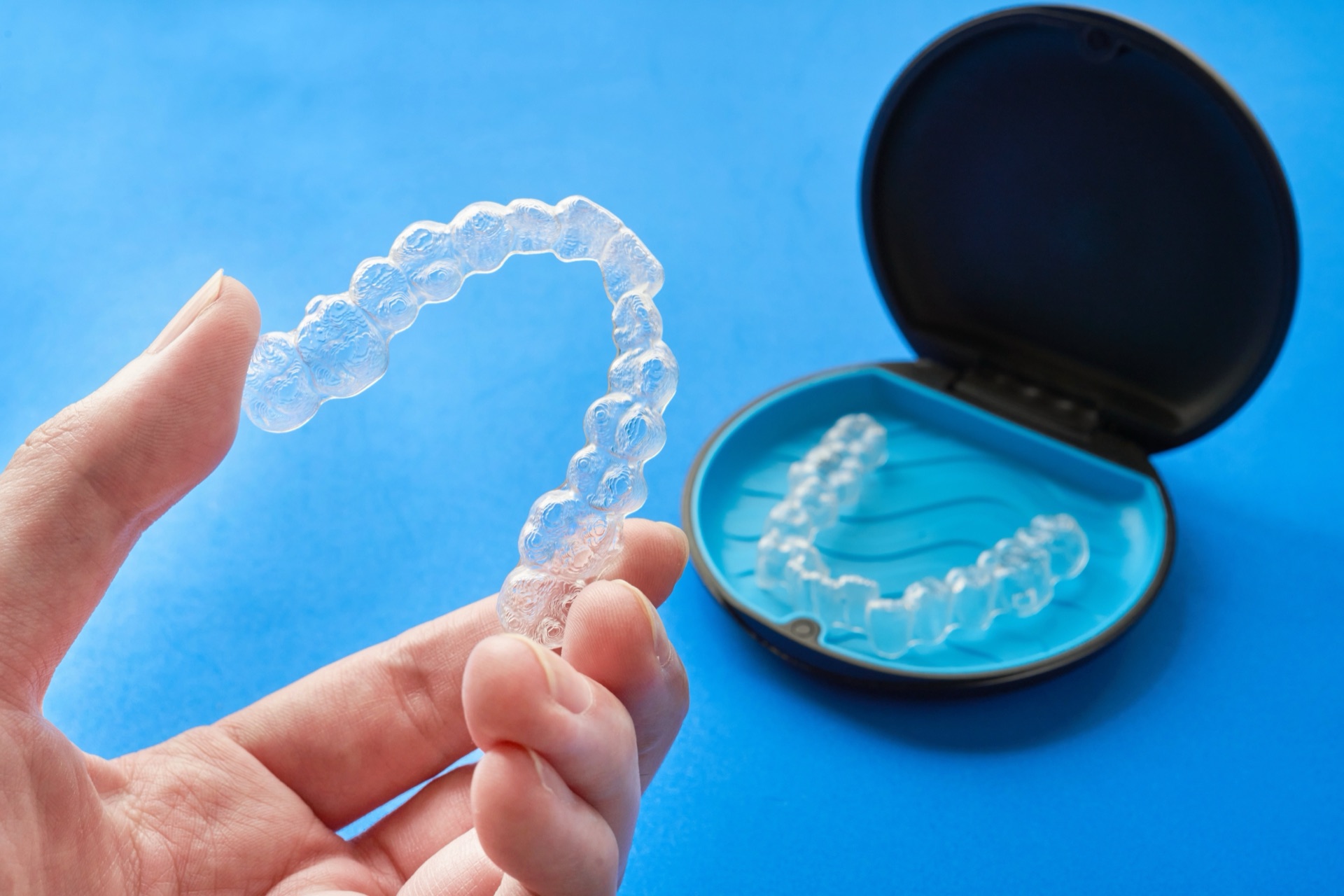
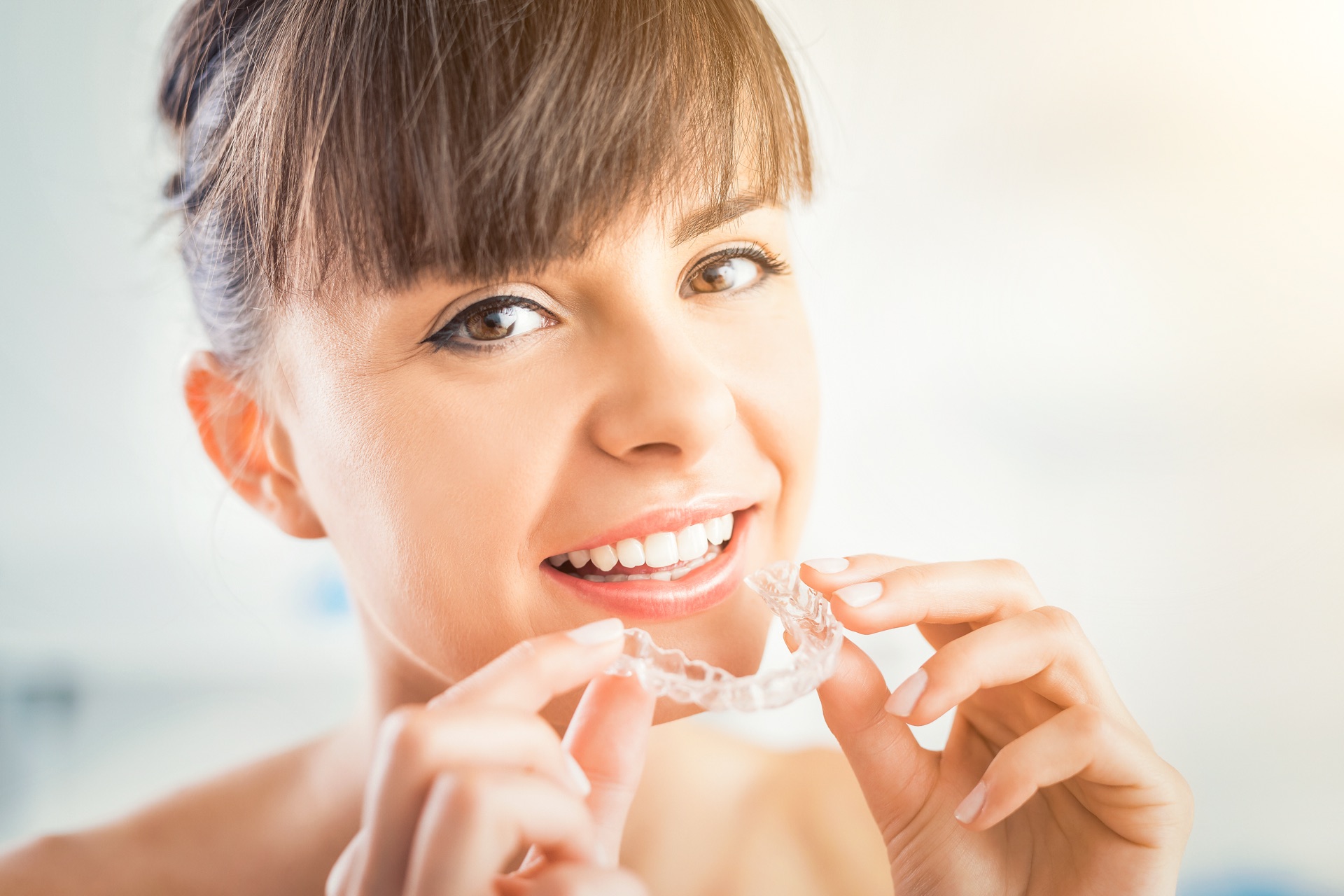
Aligners on the other hand are thin, transparent shells. On photos they are practically invisible, and in conversation noticeable only at very short range. People whose job is face-to-face — consulting, sales, reception, on camera — almost always choose aligners.
Wear comfort
Brackets have edges and wires that rub against lips and cheeks at first. Many patients need orthodontic wax to make it through the first weeks. With each wire change at the orthodontist the teeth are sensitive for 2–3 days.
Aligners are smooth. They lie on the teeth like a second skin. There's pressure when you switch to a new tray here too — but more evenly, and over a shorter time.
Eating and drinking
With fixed brackets the list of don'ts is long: no caramel, no hard bread, no whole apples, no steak off the bone. You have to adjust your diet to the braces.
Aligners come out for eating. You eat what you always eat — and put the tray back in after brushing. The only rule: nothing but water while you wear the aligners, so no sugar or acid traps under the tray.
Care and hygiene
With fixed braces thorough brushing is acrobatics: around each bracket, under the wire, with floss and special brushes. Slacking here risks white decalcification spots that remain visible after the braces come off.
With aligners you take the tray out, brush your teeth normally and clean the tray separately under lukewarm water. Caries risk and gum issues stay at the usual baseline.
Treatment duration
Fixed braces typically take 18 to 24 months. Severe cases run longer.
Aligners in our specialty — minor to moderate corrections — are done in 4 to 8 months. This is possible because we focus on front and canine teeth and don't rebuild the entire bite.
What aligners can — and what they can't
Aligners are excellent for:
- Crowding of the front teeth
- Small gaps
- Mild rotation of individual teeth
- Relapse after a teenage retainer
Fixed braces are the right choice for:
- Severe crowding requiring extractions
- Major jaw shifts
- Very heavy bite anomalies
Which category your case falls into we see at the consultation. If aligners aren't enough we tell you honestly.
Cost compared
Fixed braces for adults in Vienna cost between €3,500 and €6,500 depending on complexity. Aligners for minor corrections start at €1,580 per jaw (easy package). Moderate corrections with 20 trays cost €2,280 per jaw (sensitive). On request you pay in 36 interest-free monthly instalments — easy starts from €44 per month.
This makes aligner therapy the financially smarter option for most of our patients — provided your case fits.
Which is the right choice?
For the typical question of an adult tooth correction in the front and canine area, aligners are today almost always the better choice: faster, less visible, more hygienic, more affordable. Fixed braces remain justified for complex, orthodontically demanding cases.
Not sure? Come to the free consultation on Herrengasse. We scan, show you the projected end position and tell you clearly which method fits you best.
Ready for your new smile?
Free consultation including iTero 3D scan and panoramic X-ray — Practice at Herrengasse 6–8, 1010 Vienna.
Book a free appointment