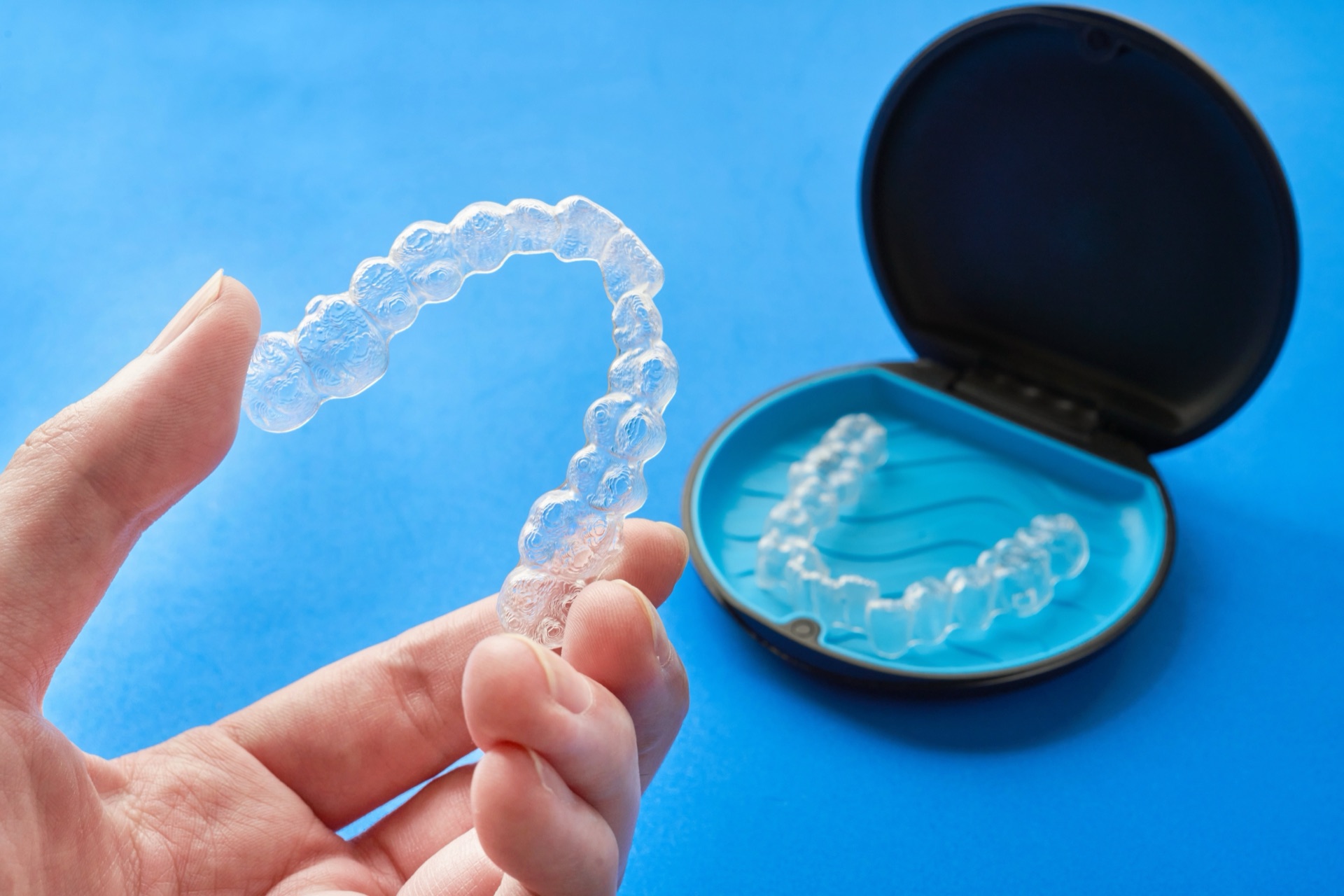
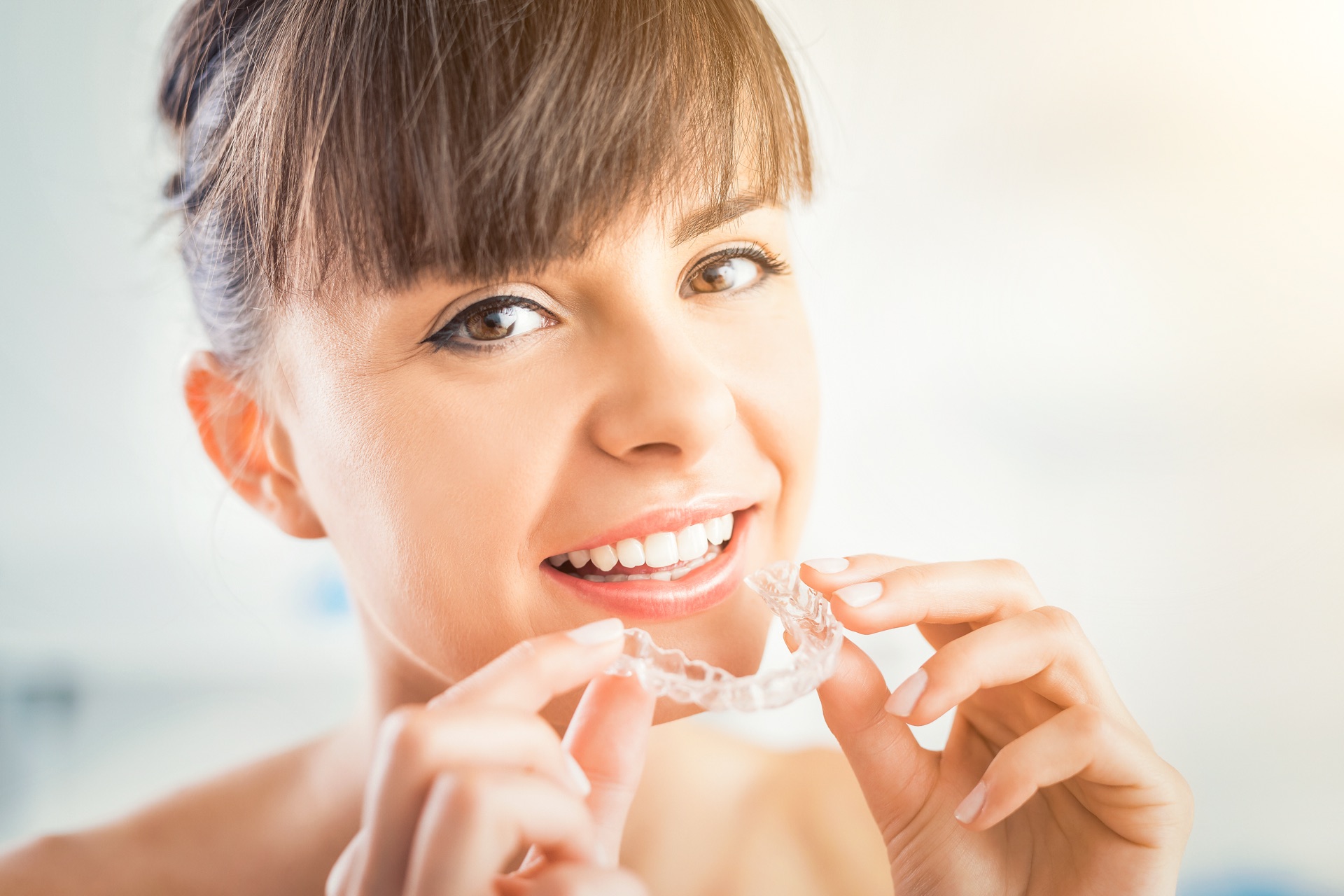
Cleaning and caring for aligners — keeping them hygienic and invisible
Why cleaning matters
An aligner sits in your mouth 22 hours a day. During that time saliva, bacteria and the tiniest food residue settle on the inside of the tray — especially where it hugs the teeth. Without regular cleaning two unpleasant things happen: trays turn cloudy and become visible, and the mouth picks up a stale taste.
A small routine prevents both — and protects your teeth from caries because no bacteria nest between tooth and tray.
Daily care
Morning & evening
Take out the aligner, rinse it under lukewarm water and gently brush it with a soft toothbrush. Ideal: a separate brush just for aligners. Don't use regular toothpaste — it contains polishing particles that scratch the plastic. Buildup later settles into those micro-scratches and the tray turns cloudy for good.
Instead: liquid soap or a drop of mild dish soap. Sounds unspectacular but works.
After every meal
Before putting trays back: brush your teeth, rinse the aligner under water, brush over it, insert. If you can't brush on the go, at least rinse your mouth and rinse the tray. Never reinsert ungreased — that's the fastest path to caries under the aligner.
When the tray needs a proper clean
Once a week deep clean. Two easy options:
- Aligner (or retainer) cleaning tablets — dissolve in lukewarm water, soak the tray for 10–15 minutes, rinse.
- Diluted vinegar or apple cider vinegar — an old household method: 1 part vinegar to 3 parts water, soak for 15 minutes, rinse thoroughly.
Both dissolve buildup reliably. Important: no mouthwash, no alcohol, no hot water. Mouthwash discolours the plastic, alcohol makes it brittle, hot water deforms it — and a deformed aligner no longer fits.
The biggest don'ts
- No hot water, no dishwasher, no boiling. Aligners are thermoplastic. Above ~50 °C they warp.
- No coloured dish soap. Some contain dyes that bleed into the plastic.
- No chewing gum with aligners. Sticks, damages the surface.
- No staining drinks (coffee, tea, red wine, cola) with aligners in. Take them out or stick to water.
- Never carry them dry in a pocket. Aligners belong in their case. Wrapped in a napkin they end up in the trash too often.
What to do when a tray is still cloudy?
Slightly cloudy: a tablet plus gentle brushing usually does it. If buildup has really set in: bring the tray to your next check-up. We assess whether you can keep wearing it or whether an early swap is the right move.
If a tray is damaged by pressure or heat (crack, deformation) — stop using it. Get in touch — we discuss whether you move to the next aligner earlier or need a replacement.
Avoiding smell and taste
A slight after-taste in the first hours with a new tray is normal — plastic taste passes. If an unpleasant smell lingers, it almost always points to insufficient cleaning or skipped brushing before re-inserting.
A quick self-check: smell a freshly rinsed and properly cleaned aligner — it should be nearly neutral. Stronger than that — time for a weekly deep clean.
A routine that fits your day
Sounds like a lot, isn't really. In practice:
- 30 seconds morning & evening with brush and soap
- 20 seconds mouth rinse + tray rinse after meals
- 10 minutes once a week for deep cleaning
That's it. Reliably hygienic aligners — and your treatment stays what it's meant to be: invisible.
Ready for your new smile?
Free consultation including iTero 3D scan and panoramic X-ray — Practice at Herrengasse 6–8, 1010 Vienna.
Book a free appointment